INTRODUCTION impact of user experience :
Importance of UX Design for Successful Applications

In this digital-first world, where user-experience has become important, users have come to expect fast, simple, and seamless interactions. An application’s success is no longer judged based on its features but on how well they satisfy its users. Companies that used to prioritize increasing technical features are now finding that usability, aesthetics, and emotional satisfaction matter as much — if not more. This reorientation has made UX design integral to digital product development and improve the user-experience of user.
User experience isn’t just an optional icing on the cake. It is a baseline necessity that impacts customer retention, engagement and even revenue. Good groundwork A definition of successful applications — be they Web, mobile or enterprise platforms — will always include a well-considered user experience strategy that aligns business goals with user expectations. As a result of changing UI design trends, UX contributes to defining applications that we dream with and use on a daily basis.
Moreover, understanding user-experience can help businesses tailor their products to meet customer needs.
This blog investigates why UX is critical to the success of an application, the impact of contemporary design considerations on user behaviour, and how organisations such as Bridge Group Solutions can capitalise on UX excellence to develop effective digital applications and how it improve the user-experience.
Why UX Design Is the Foundation Of Successful Apps
Importance of UX Design for Successful Applications
How the Importance of UX Design Impacts User Engagement
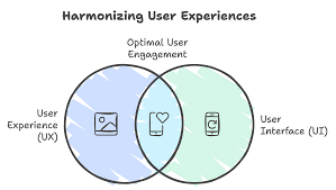
UX design is the process of designing products that are tailored to the needs and habits of users. It isn’t just about how an app looks — it’s about how it feels. When well executed, UX value is achieved through:
1. More Usability
A user should be able to use up his interface with no need of explanation. A clear visual hierarchy, consistent design patterns, and predictable behaviors make the application easier to use, which ultimately reduce users’ frustration and cognitive load.
2. Higher Engagement
Strong UX applications have longer lasting user sessions. From customized dashboards to mobile-friendly elements, it’s the UX that gives users value with each click or tap.
3. Lower Abandon Rates
The biggest reason users leave apps is bad usability – loading slow, screens confusing, or workflows too complicated. Good UX stops that by having clean,barrier-free experiences.
4. Increased Conversions
user-experience : Signing up, purchasing, or filling out a form: UX has a direct impact at a strategic level on user decisions. Well positioned CTAs, streamlined forms and compelling micro-interactions convert.
5. Strong Brand Loyalty
Applications with evenly positive experiences become trusted. Users link smooth performance and attractive design with trust, which makes them come back and tell their friends.
Ultimately, UX is the tool that helps you bridge the gap between functionality and user satisfaction – that winning combination that determines whether your app flourishes or flops.
Understanding the Basics of Good UX Design
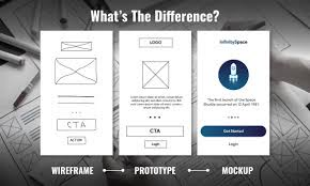
To create great experiences, the UX design process involves these six elements:
1. User Research
A good UX starts with knowing who your users really are. User interviews, surveys, journey mapping and usability testing are just some of the tools that can be used to identify what users want and what their pain points are. Such learnings are the basis of successful user experience approach.
2. Information Architecture (IA)
IA makes sure content and functionality is organized in a way that makes it easy for users to find what they want or need. Good IA prevents confusion, and helps users find what they need.
3. Interaction Design
Interactions design is concerned with how users engage with UI elements which is called user-experience. Consistent feedback, effortless transitions, and relevant animations deliver emotional pleasure and a better level of understanding.
4. Wireframing and Prototyping
Designers have the chance to experiment new approaches to workflows and layouts with wireframes and prototypes prior to any code being written. This in turn helps us to early on validate assumptions and evolve the strategy of the user experience.
5. Visual Design
Looks do matter when it comes to feelings. Embracing contemporary UI design trends such as minimalist design, subtle gradients, neuromorphism and micro-interactions, visual design aids in the formation of highly captivating and unforgettable experiences.
How User Experience is Influenced by UI Design Trends
UI design trends are always evolving and changing under the influence of the development of technology, user expectation and user- experience and brand direction. Although not every trend is suitable for every app, being on top of what’s happening can enable you to keep your digital products looking fresh, reliable and desirable.
Here are the most interesting UI design trends that influence digital experiences today:
1. Minimalistic Interfaces
Minimalism is the key to clarity. The neat and simple UX/UI with the sufficient amount of whitespace concentrates on the users navigations throughout tasks that matters.
2. Micro-Interactions
Small animations, such as button feedback, loading indicators, and success messages, make the experience more fun and give users a greater sense of control.
3. Dark Mode
With beauty and eye protection, dark mode is the essential in today’s apps.
4. Neumorphism & Soft UI
With Soft UI effects, you can round off edges of layers and objects to create depth and contrast. Soft shadow and blended shapes create more natural, fluid and organic look when enhancing flat designs.
5. Customized Dashboards
Customizable interfaces that adapt to the user behaviour can greatly improve productivity and user-engagement.
6. Voice-Enabled Interfaces
Voice assistants have become popular voice commands are now your voice commands in a manner that makes both accessibility and convenience.
7. Accessibility-First Design
High contrast colors, keyboard navigable, fonts that are easy to read and compatible with assistive technology enhance accessibility.
If used correctly, these trends will help deliver a better UX with a more captivating interface, which will translate into application success.
User Experience Strategy: The Blueprint for Success
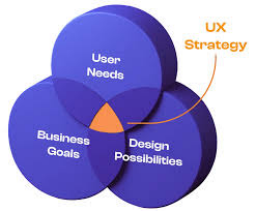
Amazing app experiences don’t just start with smart design — they begin with a full-scope, end-to-end user experience strategy, informed by business imperatives and goals. This policy is a guide to decisions that can be aided by it during the product lifecycle.
What to Include in a UX Strategy – some thoughts on this Hmm.. here are the big parts of a solid UX strategy UX strategy Is made up of: is:
● Clear Business Objectives
Each strategy should work towards the overarching goals of increasing retention, increasing user experience by improving UX, decreasing support tickets, increasing conversions, or improving employee productivity in performing such tasks.
● Development of User Personas
Personas give teams an ability to better understand user goals, improve user experience by improving UX by correct pain points, motivations, and behaviors so that our solutions truly connect.
● Customer Journey Mapping
Each stage of the user experience can be analyzed, including how users learn about us, obtain our products, achieve their goals, resolve issues, and more for potential enhancement.
● Data-Driven Design
Analysis certainly tells us what to do when our users violated what we we expected . Watching clicks, bounces, and session times is a way to subtly adjust UX.
● Consistency on All Platforms
On-Web-Mobile Under Users should be able to expect a consistent experience Regardless of Whether they are Using the web, mobile, or desktop applications. Users Learn Predictable and cohesive experiences are built with a unified design system.
● Continuous Testing
UX testing is a must. Usability tests, A-B tests, and accessibility audits will reveal pain points that are hidden, and they will enable you to fine tune your performance
● Cross-Functional Collaboration
The designers, developers, product managers and the business owners should work together throughout the entire process to make sure the UX is feasible and meets the technical constraints.
How Better UX Saves Money and Builds Business
It has been known for some time now in the design industry that the benefits of UX are multi-layered and go beyond end users and designers to influence an organization’s efficiency, financial performance and brand equity.
Here’s a quick rundown on how UX creates value:
1. Development Costs Get Cut
It is much less expensive to identify these usability problems during the prototyping stage, rather than after product release.
2. Better Support Desk Productivity
Better usability translates to fewer user errors and less reliance on customer support.
3. User Retention
A good experience means users return and thus gets them to deliver higher lifetime value.
4. Better Efficiency for Enterprise Applications
Internal applications—Good UX makes employees more productive and so reduces a major source of operational bottlenecks for many organizations.
5. Improved Competitive Advantage
Given the sheer number of digital products on the market, user experience is a strong differentiator.
6. Increased Revenue
Better usability has an immediate effect on increasing conversions, subscription renewals and customer satisfaction—which in turn drives business growth.
Connection Between UX Design and Performance of Apps Applications that take the UX for granted often have to deal with:
● High bounce rates
● Difficult to navigate through
● Low adoption
● Negative reviews
● Diminished loyalty
While well designed UX apps enjoy:
● Good engagement
● Higher NPS and satisfaction
● Ease of onboarding
● Strong brand trust
Research demonstrates that organizations that invest substantially in UX far outperform their rivals. This is evidence that UX has a direct effect on both the technical and business results.
Examples of UX Principles at Work
If you want to have a better idea of what UX actually is, check out these examples:
1. Easy Sign-Up Questions
Condensing a multi-step sign-up into a one-tap social login can boost conversion rates.
2. Smart Search
Predictive search and filtering options enable users to search for information quicker and more accurately.
3. Easy to Navigate
The user flows are simple, a clean menu structure and clear breadcrumbs make navigating the application a breeze.
4. Feedback Alerts
Success messages, warnings, and progress bars are all part of the charm of good UX that makes users feel in control.
5. Contextual Onboarding
Interactive walkthroughs to reveal key features to the first-time user, be it via tooltips or Full Screen Slideshow/Product Tours/Lightbox presentations(see Infogram, for example).
These examples show how UX design can result in a smooth and enjoyable experience.
How Bridge Group Solutions Improve UX for Digital Solutions
Bridge Group Solutions builds great digital products from the user’s perspective. We always place the user at the center. Our approach to UX design is intended to result in quantifiable benefits – engagement, efficiency, and satisfaction.
What we do to help your business growing is:
1. Research-Driven Design
We start by identifying user needs with research, personas and journey maps.
2. Strategic UX Framework
Our user experience strategy ensures that UX activities are tied to your business objectives and that each design decision contributes tangible value.
3. Modern UI Design Trends Integration
We employ modern UI design trends and principles such as minimalistic design and powerful interaction design to build compelling and user-friendly interfaces.
4. Prototyping & User Testing
Interactive prototypes play a critical role in the validation of ideas from an early stage, saving you from making costly revisions in a later stage.
5.Accessibility-Forward Approach
We deliver for audiences of all abilities by implementing web accessibility requirements and the principles of inclusive design.
6. Cross-Platform Consistency
Our design systems enable experiences that fit both mobile and desktop, and encompass enterprise applications.
7. Continuous Improvement
We partner with clients after their product has launched to further develop the experience based on data from the real-world and feedback from users.
Conclusion
Whether or not a digital application is successful depends largely on how the users feel as they interact with it. With increasing demands, complex digital environments, aggressive competition, functional is not enough for business. A good interface design must be based on a sound user experience strategy.
When these new UI design trends are combined with good UX design, apps can provide users with the clean, quick, and gratifying experience they are looking for. Companies that bring UX practices in not only have higher engagement and retention, but they do so with a long term competitive advantage.
User-Experience (UX) Impact on Application Success In today’s fast-paced digital landscape, the importance of UX design for successful applications cannot be overstated. A well-crafted user experience is critical for enhancing usability, driving engagement, and boosting conversion rates. As modern UI trends evolve, integrating these elements into a coherent UX strategy ensures that applications not only meet user expectations but exceed them. By prioritizing user-centric design, businesses can foster lasting relationships with customers, ultimately leading to sustained growth and innovation.
Learn more about UX principles at the internboot
Leave a Reply