Considerations
In the rapidly evolving digital economy, companies need to be able to scale quickly without
impacting performance, efficiency or the customer experience. The ability to scale is no longer a
competitive advantage—it’s a business imperative. Scalability allows an organization to increase
its capacity, broaden its activities, and maintain consistent levels of service and quality of work.
But growing isn’t just a question of turning on more resources. It is a blend of technical aspects,
more efficient workflows and being proactive with long term perspectives. Businesses that don’t
plan for this are the ones that end up hitting bottlenecks, slowdowns and lost revenue.
This blog delves into some important technical and process aspects that are likely to impact
enterprises intending to scale up, ranging from infrastructure design to operational workflow
fine-tuning through to strategic enterprise planning.
Read More blogs …….
3. Microsoft Azure Scalability Guide
https://learn.microsoft.com/en-us/azure/architecture/best-practices/scalability

Understanding Scalability
Build for growth At a high level, scalability represents an organization’s ability to increase revenue, operations, or market size at a rate faster than its cost increases. A scalable business is one that can take on more business, attract more customers, or have more transactions without having to grow its operations accordingly.
Significant Indicators of Scalability
Ability to handle higher customer traffic without downtime.
Efficient utilization of resources as operations expand.
Flexible processes that adapt to evolving market conditions.
Sustainable growth without quality compromise.
Scalable solutions are about technology and process maturity, and they are both complex. While technology, infrastructure, are critical, so too are clearly defined workflows, operational discipline, and strategic planning.
Engineering Analysis
Preparation to scale involves making a hospitable environment and a system that can scale in size and complexity.
Cloud Solutions
A growing number of enterprises are moving to cloud platforms to develop efficiently. When using cloud infrastructure, organizations can quickly increase computing power to meet demand, ensuring performance and availability.
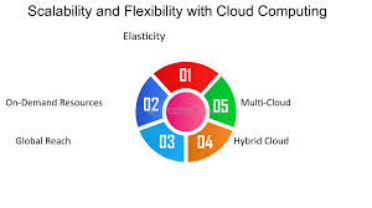
PROS:
Dynamic Resources: Access and release resources automatically as per workload requirement.
Global Reach PreviousNextGlobal ReachLaunch services in multiple regions to meet the needs of your expanding user base.
Cost-Effective: Unlike traditional resource consumption, you only pay for the acting on the resources of your consumption and don’t have to stop your work to think about over-provisioning.
High Availability. High Redundancy: Attenuate Your Downtime Vulnerabilities.
You can use a cloud with a good vertical and horizontal scalability. Containerized applications and modular systems work best for flexible demands.
2. Scalable Software Architecture
How you write applications does make a difference–a big one–in how scalable they are.They include:
Modular or SOA Design: You can decompose applications into smaller, loosely-coupled modules or services.
Load Balancing: Use load balancers to distribute traffic to your servers and services to help ease the pressure on any one of them.
Optimized Databases: Employ distributed and/or cloud-native databases solutions such as Cloud Spanner for massive workloads.
Caching Layers: To accelerate response time and decrease the burden on databases. A well-designed software can keep up with increasing demand.
3. Automation and Infrastructure as Code
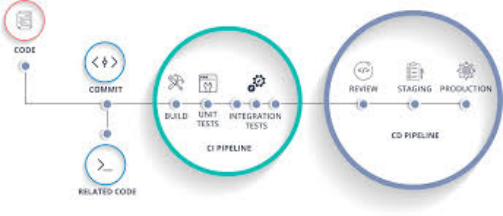
Automation is critical for minimizing bottlenecks and operational errors as the system scales.
Best Practices:
● Utilize IaC tools to automatically deploy and provision the infrastructure. ● Use CI/CD pipelines for development and release management.
● Establish automated monitoring and alerting to drive issue resolution. Automation enables organizations to scale on their work volumes and still maintain reliability.
4. Data Management
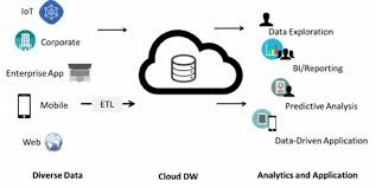
As the business grows, so do the amount, velocity, and variety of data. Good data management enables informed decision-making and efficient operations.
Considerations:
Use cloud-based data warehouses for large datasets.
Run real-time data.
Great your databases with partitioning and replication.
Ensure the security and compliance of your data as it grows.
Good data management leads to better day-to-day operations and well-informed strategic planning.
5. Customer-CentricConsiderations
Growing the business should never be at the expense of the customer experience.
Considerations:
Keep the service quality up in the busy times.
Leverage support tools to better manage an influx.
Provide self-service options and automated onboarding to decrease friction.
Customer-centric scalability ensures high levels of satisfaction as scale is achieved.
Technology and Process Integration
Good scaling is a result of good technology and good processes working together. Concentrating too much on infrastructure, or on workflows, can lead to bottlenecks and inefficiencies.
Through the combination of cloud infrastructure, modular software, automated processing, and strategic planning, businesses are enabled to manage growth effectively, increase operational performance, and provide uniform experiences to users.
The Importance of Strategic Scalability in Modern Enterprises
Scalability is more than a technical upgrade—it is the foundation of long-term business durability. In today’s digital-first environment, organizations must adapt rapidly to unpredictable shifts in market demand, customer expectations, and technological advancements. Companies that ignore scalability often face stalled growth, outdated systems, and dissatisfied customers.
A scalable organization can seamlessly transition from handling hundreds of users to millions without any degradation in performance. This level of flexibility is now possible due to modern cloud services, modular architecture, and automation-driven processes. As described in the Microsoft Azure Scalability Guide, scalable systems ensure that businesses can expand rapidly while maintaining strong reliability and responsiveness.
Why Scalability Must Be a Business Priority
1. Competitive Agility
Organizations must compete with fast-moving startups and global enterprises. Scalability allows them to launch new services faster, test ideas safely, and respond instantly to market changes.
2. Operational Efficiency
Resource optimization directly affects profitability. Scalable systems help businesses avoid overspending on unused infrastructure and instead allocate resources dynamically based on demand.
3. Reduced Business Risk
With scalable solutions, organizations can avoid:
- Sudden downtime
- Unexpected system overloads
- Customer dissatisfaction due to performance issues
- Revenue losses during peak demand
4. Improved Customer Satisfaction
Modern customers expect:
- Fast-loading websites
- Seamless user experience
- 24/7 availability
- Consistent performance
A scalable system ensures that users get the same quality of service even when customer volume skyrockets.
Deep Dive: Cloud-Driven Scalability
Cloud platforms such as Azure, AWS, and Google Cloud have transformed how businesses scale. Instead of buying physical hardware, organizations can now use flexible computing resources that expand or contract automatically based on real-time usage.
Key Cloud Features That Support Scalability
Elasticity
Cloud elasticity means infrastructure can scale up during high demand and scale down during low demand. This ensures businesses don’t waste money on unused resources.
Global Scalability
Cloud providers allow deployment in global data centers, reducing latency and providing a localized user experience for customers in different regions.
Auto-Healing and Redundancy
Cloud infrastructure can detect failures and automatically restart or replace malfunctioning components to maintain high uptime.
Serverless Computing
Serverless platforms like AWS Lambda and Azure Functions enable businesses to run complete applications without managing servers. This means:
- Lower cost
- Auto-scaling
- Lower operational overhead
Building a Scalable Culture Within the Organization
Technical scalability alone isn’t enough—companies must foster a culture that embraces continuous improvement and long-term thinking.
1. Leadership Insight
Executives must recognize scalability as a strategic priority, not an optional upgrade.
2. Cross-Functional Collaboration
Different teams—IT, operations, marketing, customer service—must work together to support scalable workflows.
3. Continuous Improvement
Scalable organizations continuously refine their processes and systems based on feedback, analytics, and evolving market needs.
4. Innovation Mindset
Teams should be encouraged to explore emerging technologies, automation solutions, and modern development practices such as DevOps and microservices.
Scalability Challenges & How to Overcome Them
Even though scalability offers remarkable advantages, organizations often struggle with implementation. Some of the most common hurdles include:
Challenge 1: Legacy Infrastructure
Older systems may not support high-volume workloads or integration with modern cloud technologies.
Solution:
Use staged migration, containerization, and modernization using microservices.
Challenge 2: Lack of Clear Processes
Unstructured workflows slow down scaling efforts and create inconsistent outputs.
Solution:
Document processes, implement workflow automation tools, and use centralized dashboards for collaboration.
Challenge 3: High Operational Overhead
As organizations grow, manual processes and inefficient communication can create bottlenecks.
Solution:
Adopt automation tools, CI/CD pipelines, and Infrastructure as Code (IaC) to reduce human intervention.
Challenge 4: Data Silos
When data is stored in isolated systems, decision-making becomes slower and less accurate.
Solution:
Use cloud-based data warehouses, data lakes, API integrations, and real-time data streaming technologies.
Advanced Approaches to Scalable Architecture
1. Microservices Architecture
Microservices break software into small, independent components. Each service can scale independently, improving performance and reliability.
2. Event-Driven Systems
Event-driven architectures allow systems to react instantly to user actions or business triggers, enabling real-time responsiveness.
3. Distributed Databases
Databases like Google Spanner, Amazon Aurora, and MongoDB Atlas support massive workloads and global user bases.
4. Edge Computing
Edge computing processes data closer to the user, reducing latency and improving application performance at scale.
Customer Experience as a Scaling Priority
Scalability should focus not only on systems but also on people—especially customers.
Key Strategies:
- Use customer analytics to monitor behavior and identify friction points
- Offer multiple support channels (chatbots, live agents, help center)
- Provide automated onboarding and self-service tools
- Ensure platform responsiveness during peak traffic
A scalable customer ecosystem increases retention, trust, and overall satisfaction.
Scalability in the Age of AI and Automation
Artificial intelligence is transforming how businesses scale. With the help of AI tools, companies can automate repetitive tasks, analyze large datasets, and enhance user experiences.
AI-Driven Scalability Enhancements
- Predicting traffic spikes
- Auto-allocating system resources
- Detecting anomalies and preventing downtime
- Improving customer interactions through chatbots
- Accelerating decision-making through advanced analytics
Real-World Examples of Scalable Growth
1. Netflix
Moved from physical DVDs to a global streaming platform by using scalable cloud infrastructure.
2. Amazon
Expanded worldwide using distributed systems, service-oriented architecture, and massive automation.
3. Airbnb
Used cloud-based microservices and event-driven architecture to support millions of daily bookings.
These examples prove how scalability unlocks global business potential.
The Future of Scalable Enterprises
Scalability will continue to evolve alongside technology. Emerging trends include:
- AI-driven auto-scaling
- Zero-trust security frameworks
- Hyper-automation
- Autonomous infrastructure
- Predictive scaling using machine learning
- Platform engineering
- Low-code/no-code development for rapid scaling
Businesses that embrace these advancements will maintain a strong competitive edge in the coming decade.
Conclusion
Having the ability to scale is a fundamental for sustainable growth. Planning for growth involves technical infrastructure and business process considerations as well as strategic thought. Utilizing the cloud, modular applications, automated workflows, and forward-thinking planning, they established a platform capable of managing surging demand without compromising performance or customer satisfaction.
Bridge Group Solutions partners with organizations to overcome such challenges and consults in areas of scale-able infrastructure, process improvement and strategic development. Working in unison on technical preparedness, workflow productivity, and enterprise planning, organizations are equipped to confidently expand their operations, capitalize on market prospects, and consistently maintain solid business standing.
Leave a Reply