Microservices vs Monolithic Architectures: Which One’s Better for You?
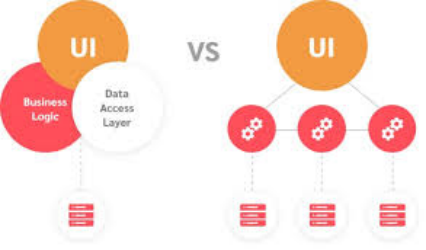
The decision of which software architecture to use is very important, as it will directly affect the scalability, performance and maintainability of the application. Organizations have to choose between building one big system or taking a modular approach that partitions functionality into smaller services. The decision between the two approaches depends on project size, team size and expectations about future growth as both strategies have their advantages and drawbacks.
To create software that effectively delivers on user needs and business outcomes, you need to understand these two approaches. In this blog, we look at how traditional single-system applications compare to modern, modular architecture, outlining the respective advantages and disadvantages to each approach, and how scale requirements play a part in the decision.
Understanding Monolithic Applications
Microservices
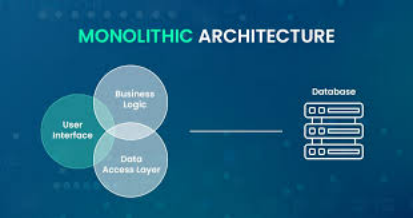
A monolith application is a single, cohesive application that encompasses all the modules related to the user interface, business logic, and data at one end. This is the architectural style of many enterprise systems that were developed in the last two decades.
Key Characteristics
● Single codebase contains all the features.
● Shared database and a shared data access layer.
● Strong inter-module coupling.
● All-in-one packaging for the whole system.
Benefits
Simplified Development and Deployment
Developers can develop, test, and deploy the app as a whole, potentially speeding up time to first delivery.
Performance Efficiency
Component-internal communications are process-internal with negligible latency cost.
Ease of Debugging for Small Projects
Bugs are far easier to track down when there’s not much code and when it’s all in one place.
Challenges
Limitations of Scaling
Increasing demand often necessitates scaling the entire system, which can be expensive and inefficient.
Tightly Coupled Components
Changing one module may inadvertently impact others, making maintenance difficult.
Collaboration Bottlenecks
Large teams collaborating on a single codebase may also experience merge conflicts and coordination issues.
Increasing Complexity Over Time
New features end up making the system bulky, and that slows development and contributes to technical debt.
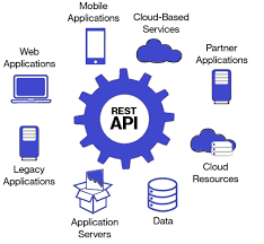
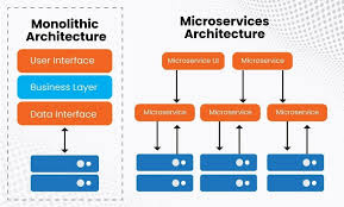
What Are Modular and Microservices Approaches? A modular architecture breaks down the app into smaller, self-contained services that handle a specific business function. These services talk to each other using APIs or messaging protocols and this enables teams to work in parallel and scale independently.
Highlight features
● Each service is independent in terms of codebase and database.
● Services can be installed and updated independently.
● Modules are loosely coupled to allow for flexible design and update.
● Promotes a modular, component-based development model.
Pros
Scalable Architecture
Individual services can be scaled as required, allowing for more efficient handling of load variations.
Flexibility and Maintainability
It is possible to patch or replace services without dismantling the system.
Parallel Development
Groups can function autonomously on distinct services, enabling faster releases.
Failure Isolation
Caching moderating content-heavy portions of your application in a service can help insulate the rest of your app from failures in individual services.
Technology Diversity
Distinct services may also be implemented with different technologies or frameworks that are more suitable for the particular task at hand.
Difficulties
Complexity of Operations
Running several services, on the other hand, is challenging to monitor and orchestrate.
More Effort Needed for Setting Up
Containerization, deployment pipelines, and service discovery entail an upfront cost.
Communication Overhead
Consistent and reliable communication between services is challenging.
Monitoring and Debugging
Distributed applications need specialized tools to log and monitor performance. Monolithic vs. Modular Systems
| Criteria | Monolithic | Modular/Service-Orient ed |
| Codebase | A single codebase for all concerns | Codebases need to be separated |
| Deployment | Deployment unit When a system is implemented as a monolithic layer, its full set of services constitutes the monolithic deployment unit | Services are deployed independently |
| Scaling | The application is scaled as a whole – you can’t just scale parts of it alone any higher than the application level. | Subsystems may be independently scaled |
| Team Cooperation | Big teams not so much fun for. | Parallel development is simpler |
| Resilience | point of failure = single point of failure | Bugs can be isolated at the module level |
| Maintenance | Keeping it up may be really hard, but it’s not like it can’t be done. | Easier to because of modularity modules |
| Tech Flexibility | One stack for entire organization, and now kind of 3 years with .org for open source/back office/app store etc | Different kostenfrei stacks can be selected for different Services |
Based on this, it is clear that the right decision depends on the size, growth expectations, and level of operational complexity of the application.
When Are Monolithic systems good
Monolithic systems are quite feasible in certain cases:
Small or Simple Applications
With less functionality and fewer developers, it is easier to manage with a single system.
Fast Initial Development
Fewer components and less overhead means faster delivery.
Predictable Load
If traffic and usage are fairly predictable, one system may be all that is needed.
Budget Constraints
Reduced upfront costs with simplified infrastructure and fewer deployment activities.
When Modular Systems Shine
The modular strategy is best for applications that require expansion, agility, and durability:
Large or Complex Applications
Decomposing the system into modules prevents the codebase from ballooning and keeps it manageable.
Variable or High Load
Services can be scaled independently to efficiently meet peaks in demand.
Parallel Development Teams
A number of teams can work in parallel on different modules, conflicts.
High Availability Requirements
Problems in one module do not bring down the entire system.
Future-Proofing
Better integration with external systems and new technologies consideration of future.
Important Factors While Selecting an Architecture The selection of an approach is influenced by business and technical considerations:
Project Size and Complexity
● Small, simple apps → Monolithic
● Large, evolving apps → Modular
Scalability Needs
● Predictable or low traffic → Monolithic
● High or variable traffic → Modular
Team Size
● Small team → Monolithic
● Large distributed teams → Modular
Time to Market
● MVP or prototype → Monolithic
● Long-term, iterative development → Modular
Maintenance Requirements
● Low maintenance→ Monolithic
● Frequent updates → Modular
Operational Capability
● Limited DevOps → Monolithic
● Mature DevOps and monitoring → Modular
Scalability Considerations

Software scalability is a major factor in selecting the architecture:
● Conventional systems scale vertically by adding more resources, which can be costly, and is limited by hardware.
● Modular systems scale horizontally by replicating only the services under high demand, resulting in more efficient and cost- effective growth.
For products that expect user growth or oscillating traffic, or for products that are updated with the features often, a modular system will probably prove more suitable in the long-run.
Modularization of Systems
As organizations begin to transition from a single-system mindset to modular architecture design, these best practices will help guide your journey:
Start with Critical Modules
Evolve high-impact features first, rather than refactor the entire system all at once.
Use Containerization
Tools such as Docker make this easier.
Design Clear APIs
Simplified interfaces enable services to talk to each other effortlessly.
Adopt CI/CD Practices
Continuous integration and delivery pipelines simplify updates and minimize risk.
Implement Centralized Monitoring
Monitor performance and errors across distributed modules to enhance dependability.
Maintain Service Boundaries
Prevent tight coupling (which may be not needed) without losing modularity.
Conclusion
Both conventional, monolithic applications and modular architectures are suitable. They’re simple and fast to build, making them perfect for small projects or MVPs. While modular architectures are known for their flexibility, fault-tolerance and better scalability which is key for large or growing applications.
The bottom line: You need to size up your project, with respect to its size, growth prospective, your team’s capabilities, and your operational maturity, before you choose a path.
Modular systems work well in scenarios with frequent updates, high availability requirements and independent scaling, while monolithic systems can still provide quick wins for small, stable applications. Bridge Group Solutions enables organizations to assess their needs, design scalable systems, and deliver the right architecture to ensure success over time. Making the right choice ensures your application remains strong, maintainable, and able to support growing business.
Leave a Reply